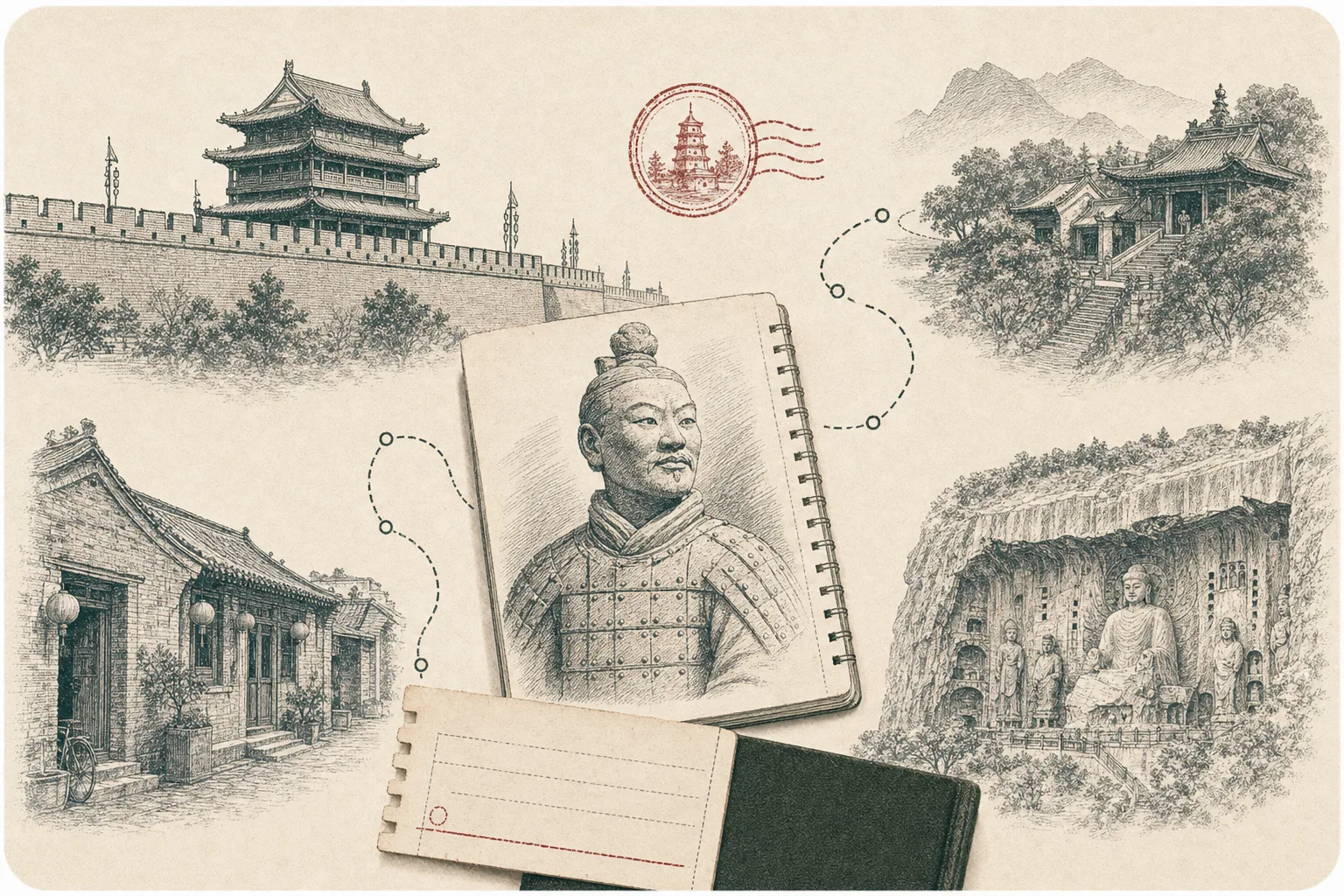
Luoyang's importance stretches across many dynasties, and the Longmen Grottoes provide its most concentrated visual encounter with that past. Thousands of Buddhist images and inscriptions occupy limestone cliffs along the Yi River, created over centuries through imperial, institutional, and private patronage.
Two full days let you give Longmen a long half-day, then use museums and urban sites to broaden the story. Shaolin Temple or other regional excursions require additional time and should not be attached automatically to an already full grottoes day.
- Recommended stay
- Two full days for Longmen plus Luoyang context
- Main visit
- A half-day or more along the officially open Longmen route
- Context anchor
- One major museum before or after the grottoes
- Seasonal check
- Heat, flood conditions, conservation closures, and festival crowds
Choose a practical Luoyang base
Luoyang has multiple railway stations and an expanding urban footprint. Accommodation near a useful metro or bus corridor can balance access to Longmen, museums, and evening streets. Verify the exact station for every train rather than assuming a generic Luoyang destination.
Save the Chinese entrance name for Longmen. Scenic-area gates and transport zones can be far enough apart that the wrong map pin creates unnecessary walking before the real visit begins.
Give the grottoes the cooler half of the day
The principal route is largely outdoors and involves repeated steps, exposed cliff paths, and bridges. In warm weather, enter early; in winter, watch for wind and ice. Check the scenic area's official notices for opening, evening programs, or route restrictions.
Carry water within site rules and wear shoes with grip. Internal transport may reduce approach distances but does not eliminate the need to walk along the carved cliff. Mobility needs should be discussed with the site because historic terrain limits some access.
Look beyond the largest Buddha
The Fengxian Temple group is visually dominant, but smaller caves reveal changes in patronage, style, inscription, and devotional practice. Use official interpretation to compare periods and notice traces of pigment, repeated niches, and the relationship between sculpture and cliff architecture.
Damage and missing heads are part of histories that include weathering, religious change, theft, and removal. Do not climb for closer photographs or touch the limestone. Individual caves may close for conservation without undermining the whole visit.
Cross the river for scale
Where the official route permits, views from the opposite bank reveal how the caves form a landscape rather than a collection of isolated chambers. The river, bridges, cliff orientation, and modern visitor management all shape the experience.
Do not rush this portion to reach an unrelated afternoon attraction. A quiet pause across the water can do more for understanding than another crowded close-up. Follow current circulation directions, which may change with maintenance or water conditions.
Use Luoyang's museums to widen the timeline
A city or archaeological museum can cover Luoyang's repeated capital status, tomb culture, ceramics, and urban development across dynasties. Choose galleries that fill the gaps left by Longmen's Buddhist focus. Reservations and closure days require advance checking.
Old-city precincts and reconstructed streets can provide an evening walk, but distinguish surviving fabric from modern interpretation. Enjoy food and public life without expecting an intact ancient capital around every corner.
Add excursions only with another day
Shaolin Temple, White Horse Temple, and other regional sites lie in different directions and carry separate histories. Choose one on a third day after mapping the entire transfer. A private car or verified public route may be necessary, but do not accept vague station solicitations.
During peony season and national holidays, accommodation, museums, and roads can be unusually busy. Official city announcements should guide reservations and timing. Build an alternative indoor route if severe weather affects Longmen.
Notebook check
- Reserve at least half a day for Longmen itself.
- Use the opposite-bank view to understand the cliff as a whole.
- Do not attach a distant excursion unless you have a third day.
The useful takeaway
Luoyang works when Longmen is the anchor rather than one stop on a regional sprint. Give the river cliffs time, use a museum to recover the city's wider chronology, and place any distant sacred site on a separate day.